


What’s the Casio WS-2100H Like to Wear Daily Over 31 Days?
The Casio WS-2100H – with its rugged resin construction, sporty design, large digital display and built-in step counter, appears to offer plenty of functionality for the money.
But specifications only tell you so much and never mention what it is like to wear.
Therefore, I decided to find out more about what the Casio WS-2100H is like to wear on a daily basis for a month. This allowed me to get a better understanding of what I liked about the Casio WS-2100H, what didn’t work quite so well for me, and whether I would buy one again.
I will also add here that the WS-2100H featured was a £20 eBay purchase, but you can get it brand new for around the £40-£50 mark.
First Impressions
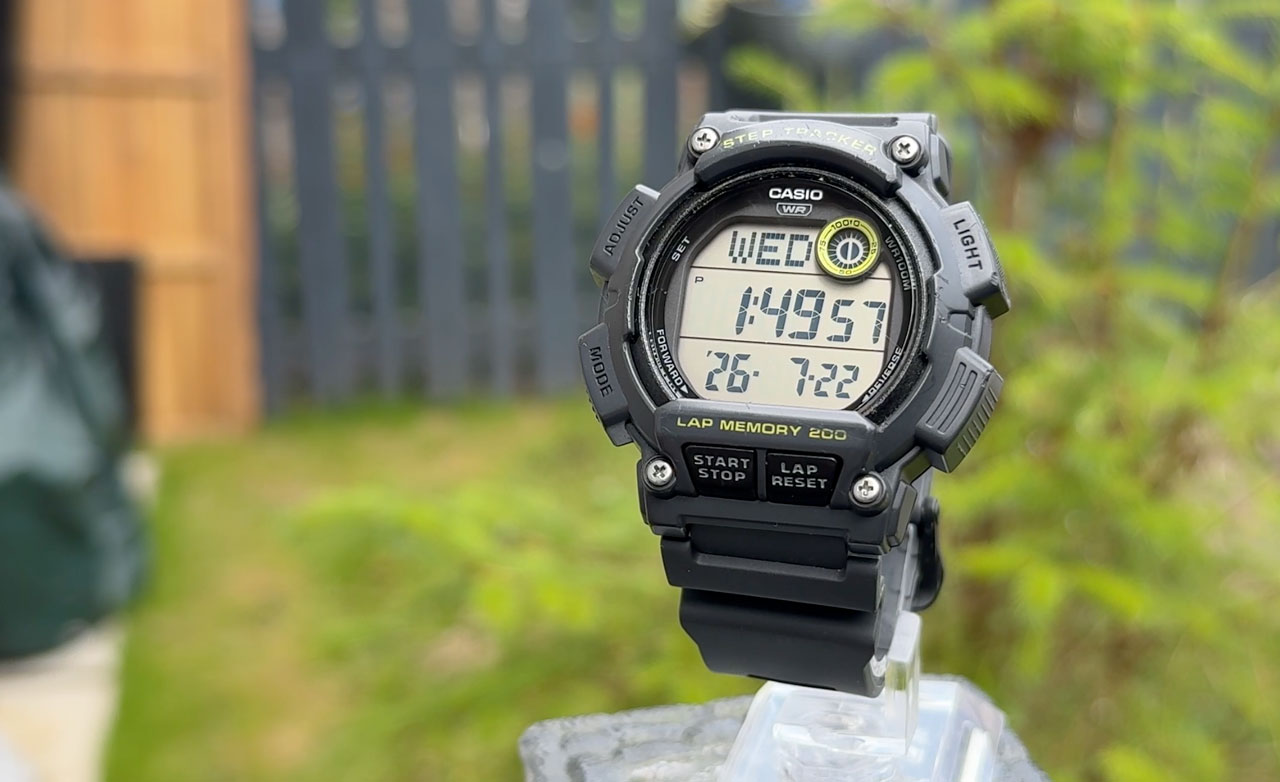
At first glance, I really did enjoy the overall design of the Casio WS-2100H.
It has a cracking Casio sports-watch appearance, with a resin case and resin strap giving it a rugged and practical look. The case design and pushers also add to the overall look and feel, I particularly liked the positioning of its two front pushers which made this watch a breeze to operate.
The colour scheme was also something I particularly enjoyed. Rather than going for an overly bright or adventurous colour combination, Casio used complementary colours to give this watch a sporty like appearance without making it look too loud.
The WS-2100H isn’t an enormous watch either. Despite having a fairly substantial-looking 48mm wide case, it didn’t feel excessively large on the wrist. This makes it quite an appealing option if you want a sporty digital Casio watch without wearing something particularly bulky.
How Comfortable was the WS-2100H?
This is where my experience of the Casio WS-2100H became a little more strained.
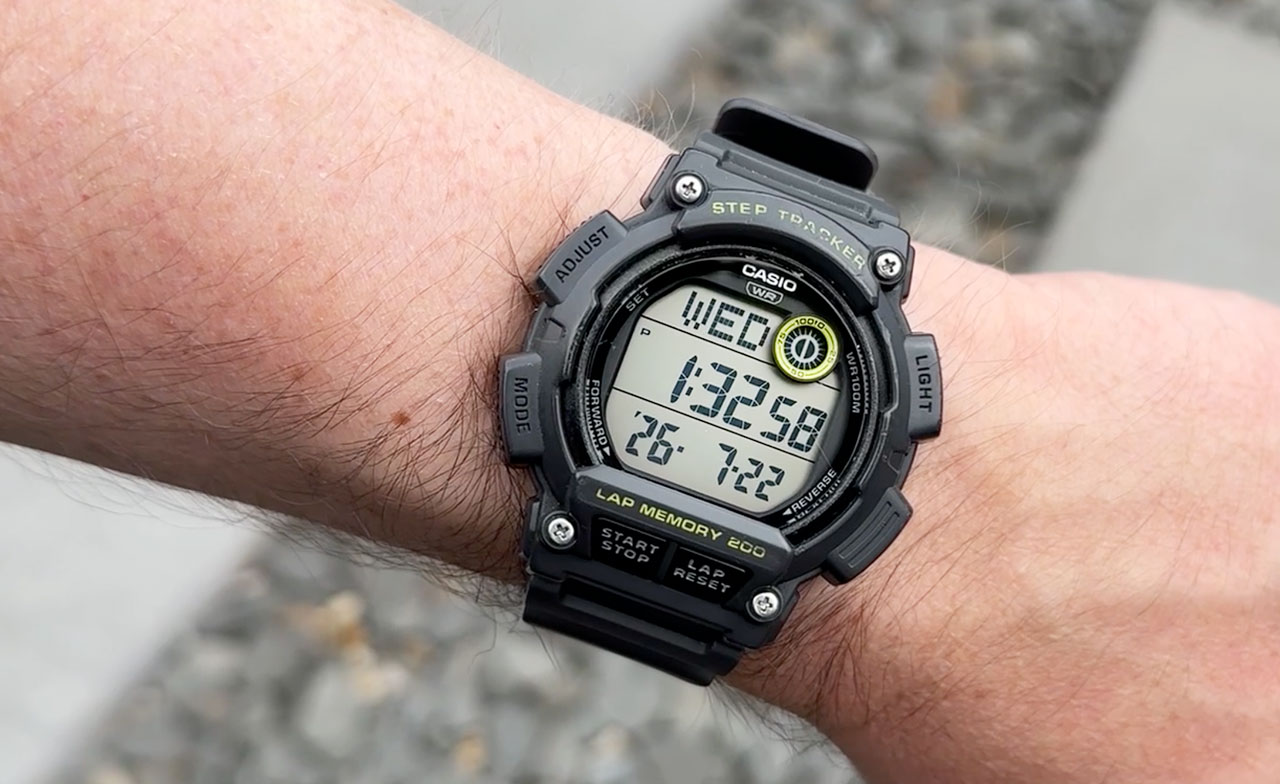
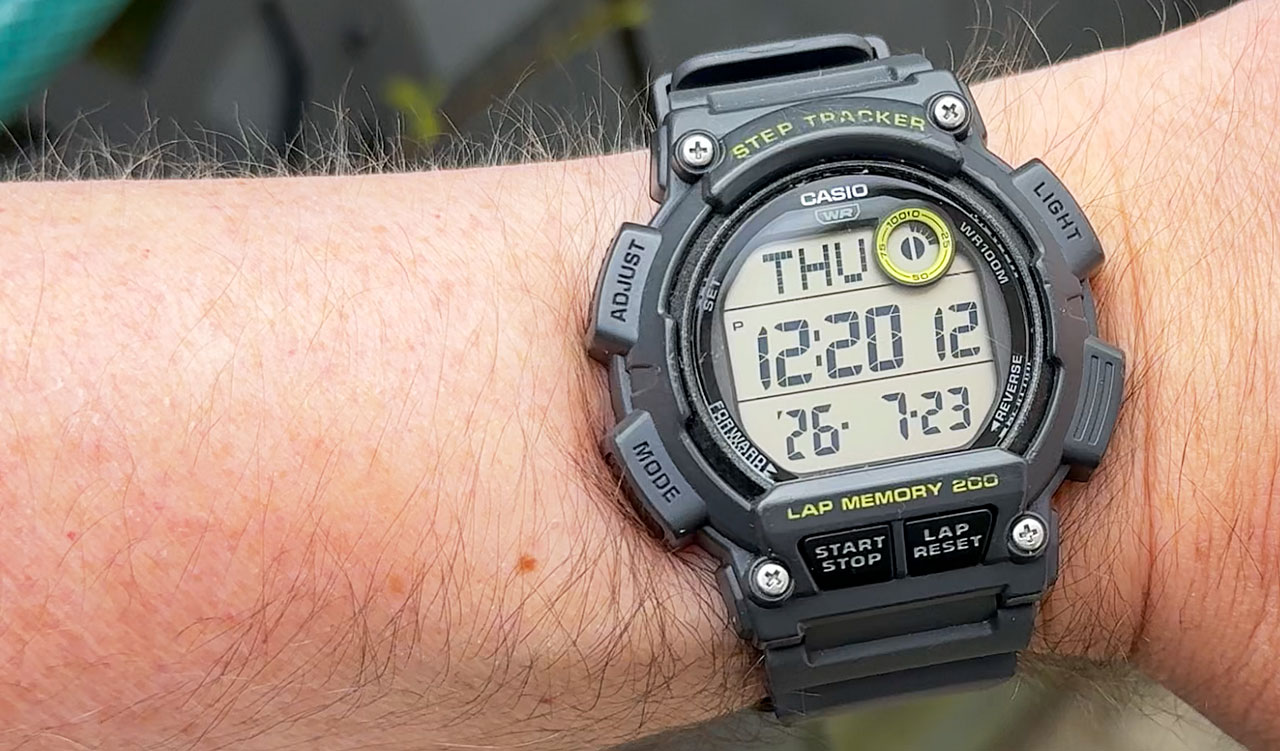
During the first few days of wearing it, I found it difficult to get the watch sitting exactly how I wanted it to on my wrist. I tend to prefer a watch that hugs my wrist without being excessively tight. Ideally, I want to wear a watch that melts away on my wrist, so I forget that I’m wearing it on a daily basis.
The Casio WS-2100H didn’t quite achieve that for me, which I am sorry to say.
The spacing setup between the adjustment holes on the resin strap meant that I found myself choosing between having the watch wear either too loose or too tight. I went for the looser option but that intern meant that I could feel the watch move around on my wrist a lot more than I would have liked. This was especially the case when wearing long sleeved tops with elasticated cuffs.
That movement became something I noticed for quite a while, which sullied my enjoyment of wearing it on a daily basis. I did eventually get used to it over the month I had worn it but from time to time it did make itself known.
That said, I wouldn’t necessarily consider this a deal-breaker for everyone reading this review. Wrist size and shape obviously play a significant role as to how a watch fits. Someone with a slightly larger wrist may have a completely different experience to me, with the Casio WS-2100H potentially fitting you a lot better than it did me.
On a positive note, there was little to no hand inhibition and even when doing things such as gardening, washing the car etc, I could move my wrist freely.
After 31 days, I had become accustomed to the watch, but it still wasn’t one of the most comfortable watches I have worn in recent times.
The LCD Digital Display
One area where I had very few complaints was the display. In fact, I really liked it!
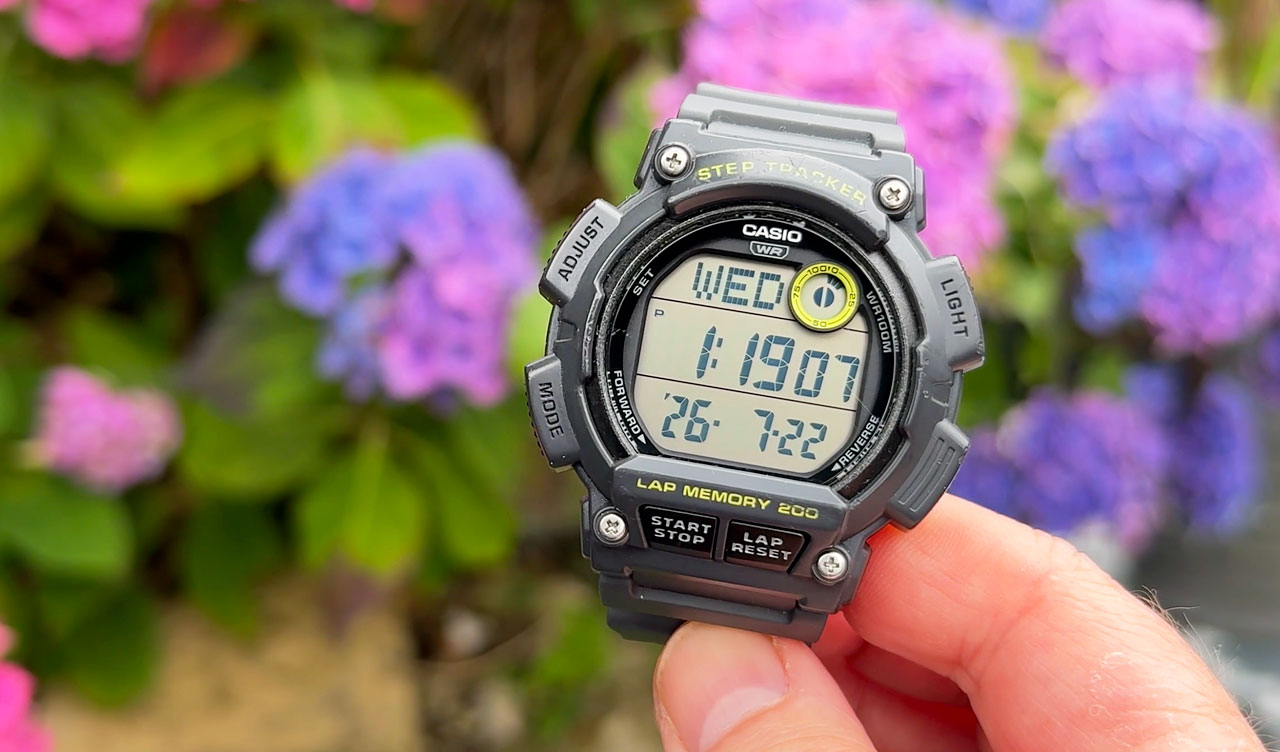
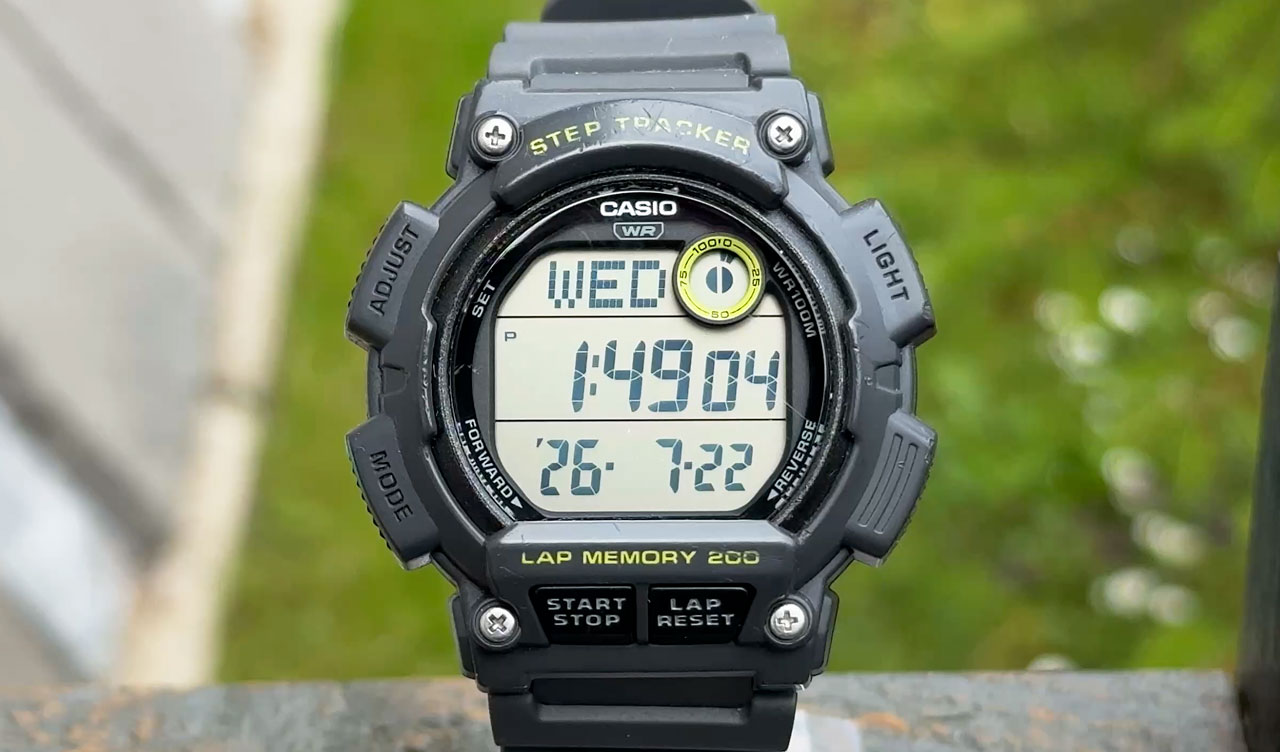
The main digital display is large and easy to read, with the information laid out in a straightforward manner. The time is prominently displayed in the centre, while the day of the week and date are positioned top and bottom.
The typography is also slightly different from what I’ve become accustomed to seeing on many other Casio digital watches. It’s a small detail, but I enjoyed the change.
The display manages to provide plenty of information without becoming cluttered, and the overall layout makes it easy to glance at the watch and immediately understand what you’re looking at.
There’s also an indicator to the upper-right section of the display relating to the seconds being counted in time keeping mode as well as it acting as a step-counting indicator. It doesn’t interfere with the main time display, which was also nice to see.
In all, for everyday use, I found the LCD display very easy to live with.
The Backlight
The backlight was another feature that impressed me.
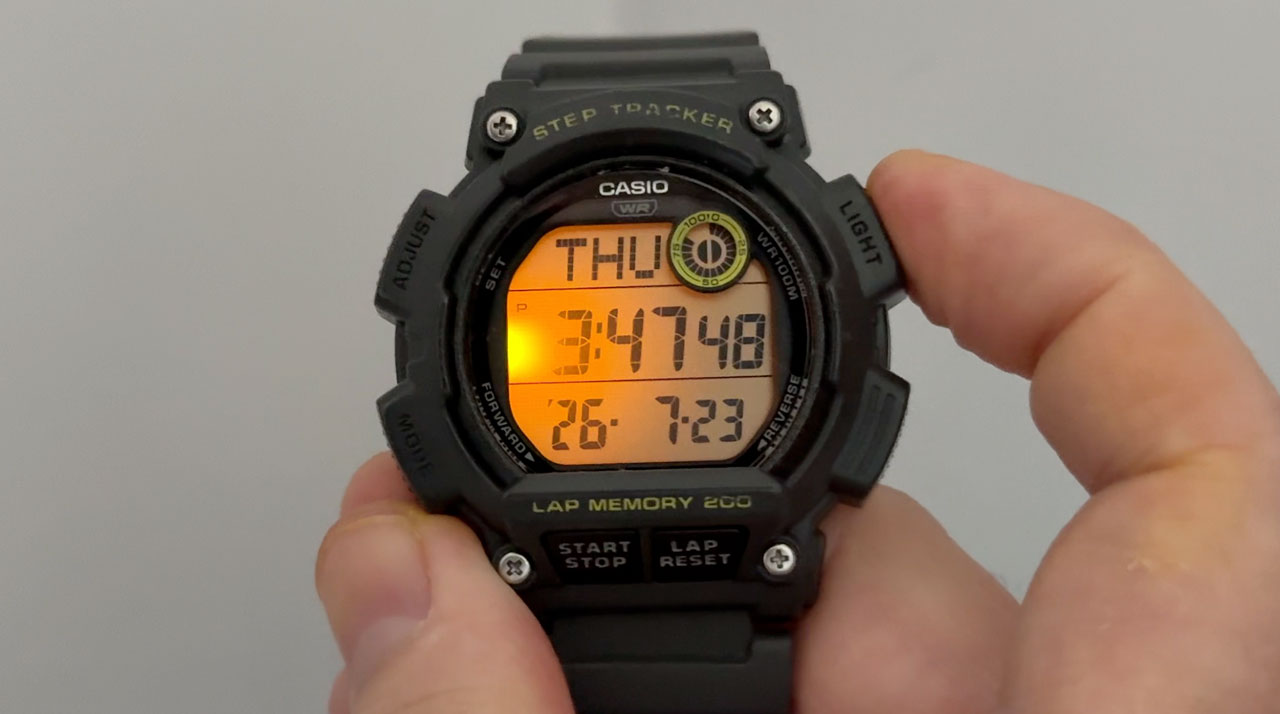
The Casio WS-2100H uses a single amber LED positioned to the left of the LCD display. It isn’t an overly complicated lighting system, but it does its job very well.
In darker environments, it provided enough illumination to read the display and tell the time without any real difficulty and that’s all I really want from a backlight.
The Step Counter – Is it accurate?
One of the headline features of the WS-2100H is its built-in step counter.
The watch uses a three-axis acceleration sensor to measure your steps and can display a count from zero all the way up to 999,999 steps.
You can also review your step history over an eight-day period, allowing you to see how active you’ve been over the past few days. There’s even a graph that gives you a quick visual representation of your activity.
The watch also allows you to set a daily step goal, with targets ranging from around 1,000 to 50,000 steps.
But how accurate is the step counter?
I decided to put it to a fairly basic real-world test.
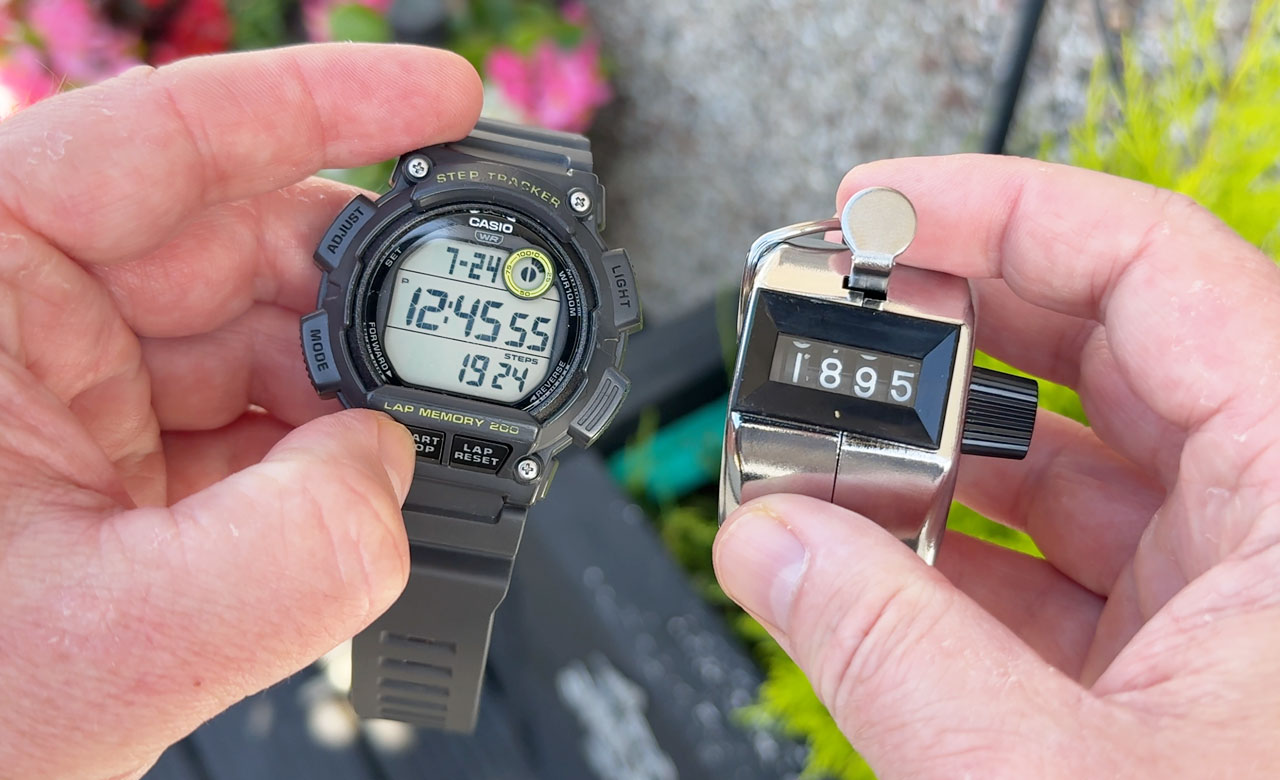
I took the watch out on a walk and manually counted my steps using a small hand-held clicker. This meant that every time I took a step, I clicked the counter. This allowed me to compare my manually recorded total with what the Casio WS-2100H registered.
There was some variation between the dedicated step-clicker and the Casio WS-2100H, but at around the £50 price point I was pleasantly surprised with how small the variance was.
Ideally over the month I had worn the Casio WS-2100H, I had seen the step counter as more of an indicator of my general activity levels as opposed to more accurate step counting.
If you’re looking for a dedicated fitness tracker, this obviously isn’t going to be to most accurate. But if you simply want a traditional Casio digital watch with some basic activity tracking built in, it’s definitely worth considering.
One final thing to mention is that it doesn’t connect to your smartphone in any way as it doesn’t have Bluetooth built in.
Features and Functions
There’s considerably more to the Casio WS-2100H than its simple step counter.
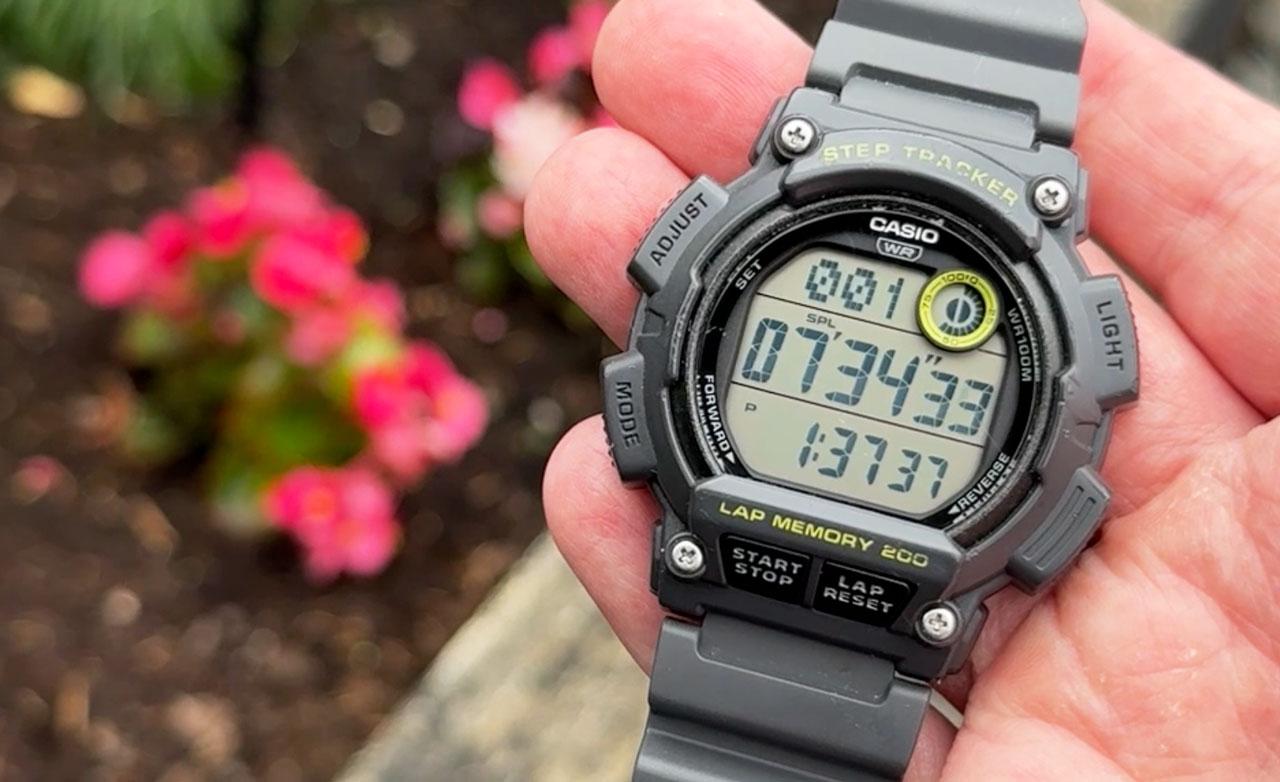
It has a stopwatch capable of measuring up to 24 hours of elapsed time, along with first and second-place finish indicators and split-time functionality.
A 200-lap memory, allowing you to store and review a substantial number of lap times.
There’s also a countdown timer capable of counting down from up to 60 minutes, dual time and five independent daily alarms.
An hourly time signal can also be activated or deactivated, allowing the watch to beep on the hour every hour.
As well as the above, other specifications include:
- 12/24-hour time format
- Automatic Calendar up to 2099
- Approximately three-year battery life
- 100-metre water resistance
- 24-hour stopwatch
- Countdown timer
- Dual time
- Button mute operation
When you look at everything included, the WS-2100H is actually a very capable digital watch for the money.
What Was the WS-2100H Like After 31 Days?
This is where my overall opinion becomes a little bit of a mixed bag.
After wearing the Casio WS-2100H every day for 31 days, I found myself really liking some aspects of the watch while struggling with others.
Comfort was the biggest issue for me.
I simply couldn’t get the watch to sit on my wrist exactly how I would have liked it to. It simply moved around more than I liked, which was a massive shame.
That doesn’t mean the watch would be uncomfortable for everybody. In fact, I’d strongly recommend you trying one on before you buy to see if it works for you.
The design, on the other hand, is something I really liked.
I think Casio has done a great job with the appearance of the WS-2100H. It’s sporty, rugged and practical without resorting to extremely bright colours or an oversized case.
The LCD display is also another highlight.
It’s large, clear and easy to read, and I particularly like the typography and layout. The step counter information is a button press away without making the main display feel cluttered, while the amber LED backlight works very well in low-light conditions.
Would I Buy it Again?
Knowing what I know now after wearing the Casio WS-2100H for 31 days, would I buy it again?
Personally, probably not — at least not brand new at around the £50 price point.
And that’s almost entirely down to the fit and lack of comfort that I had personally experienced.
I simply found that the watch moved around my wrist more than I would have liked, and after 31 days that remained my biggest criticism and was a little glad to wear something else after the month had ended.
However, I don’t think that means you should automatically discount the Casio WS-2100H.
If you like the design, the large digital display, the step counter and the extensive range of functions, I’d definitely recommend trying one on.
In fact, if you’re buying one brand new I’d make sure you’re purchasing from a seller with a suitable returns policy. Wear it around the house, see how it feels and, most importantly, see whether you can get the watch to sit comfortably and securely on your wrist.
The Casio WS-2100H certainly taught me that sometimes how a watch fits your wrist can be just as important as everything else it has to offer. Sadly for me how it fitted just wasn’t enough for me to warrant the usual thumbs up but more of a ‘see how you get on with it’.